itel A300+ vs Redmi 17: Which Budget Phone Is Worth Buying?
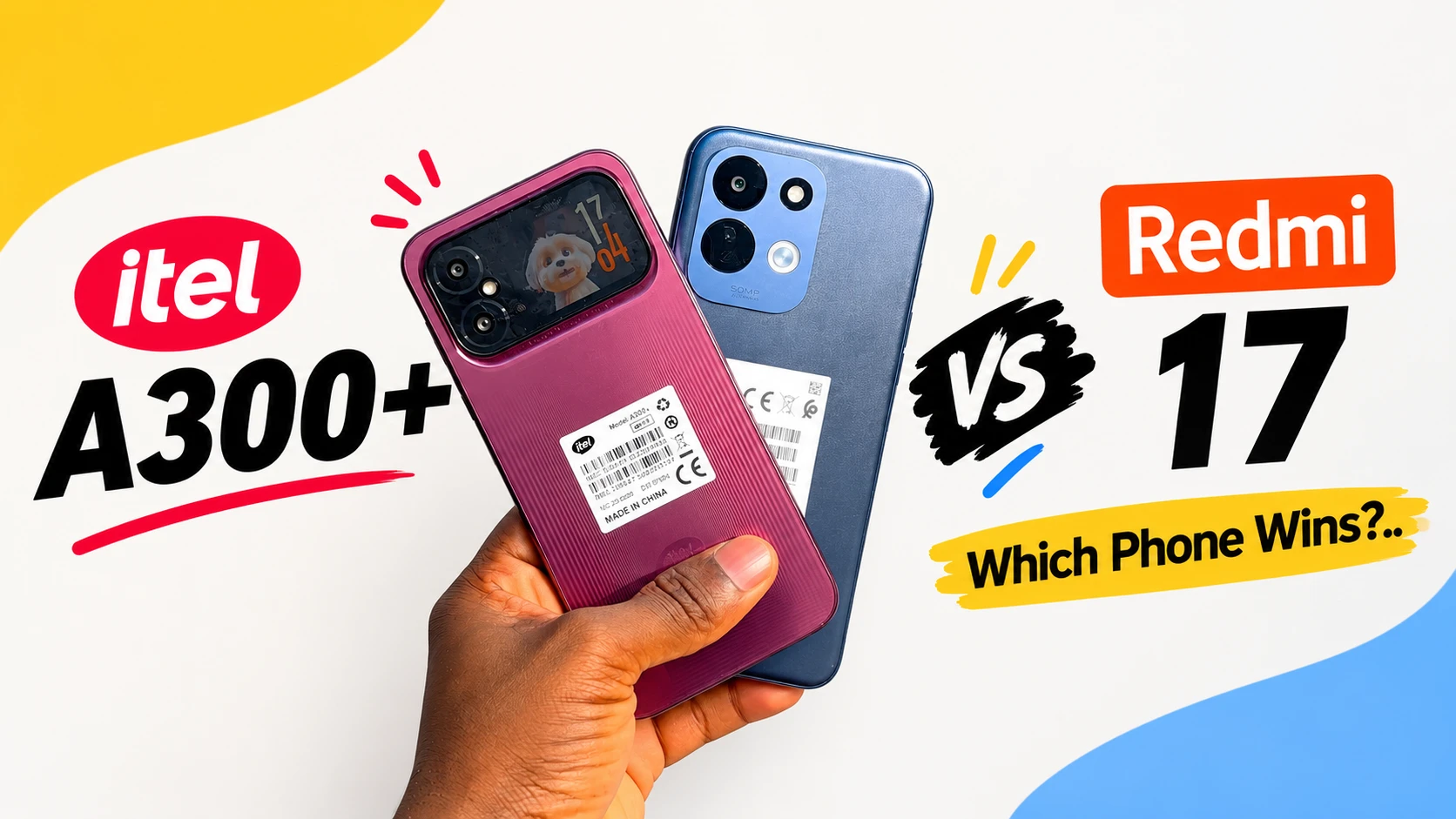
When shopping for a budget smartphone, most buyers expect the usual combination of a large display, decent cameras, reliable performance and a big battery. However, the itel A300+ and Redmi 17 take slightly different approaches to making their designs stand out.
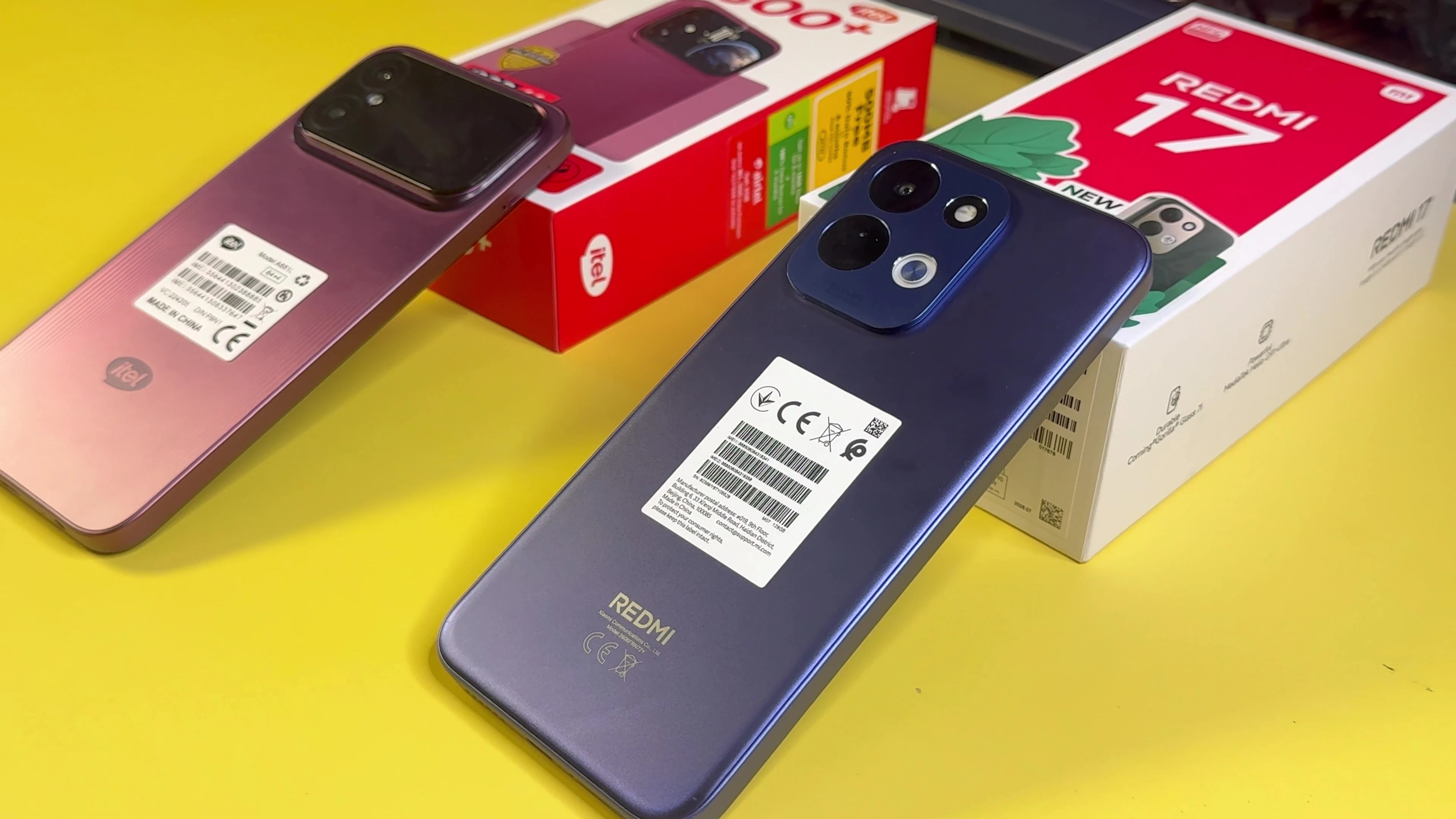
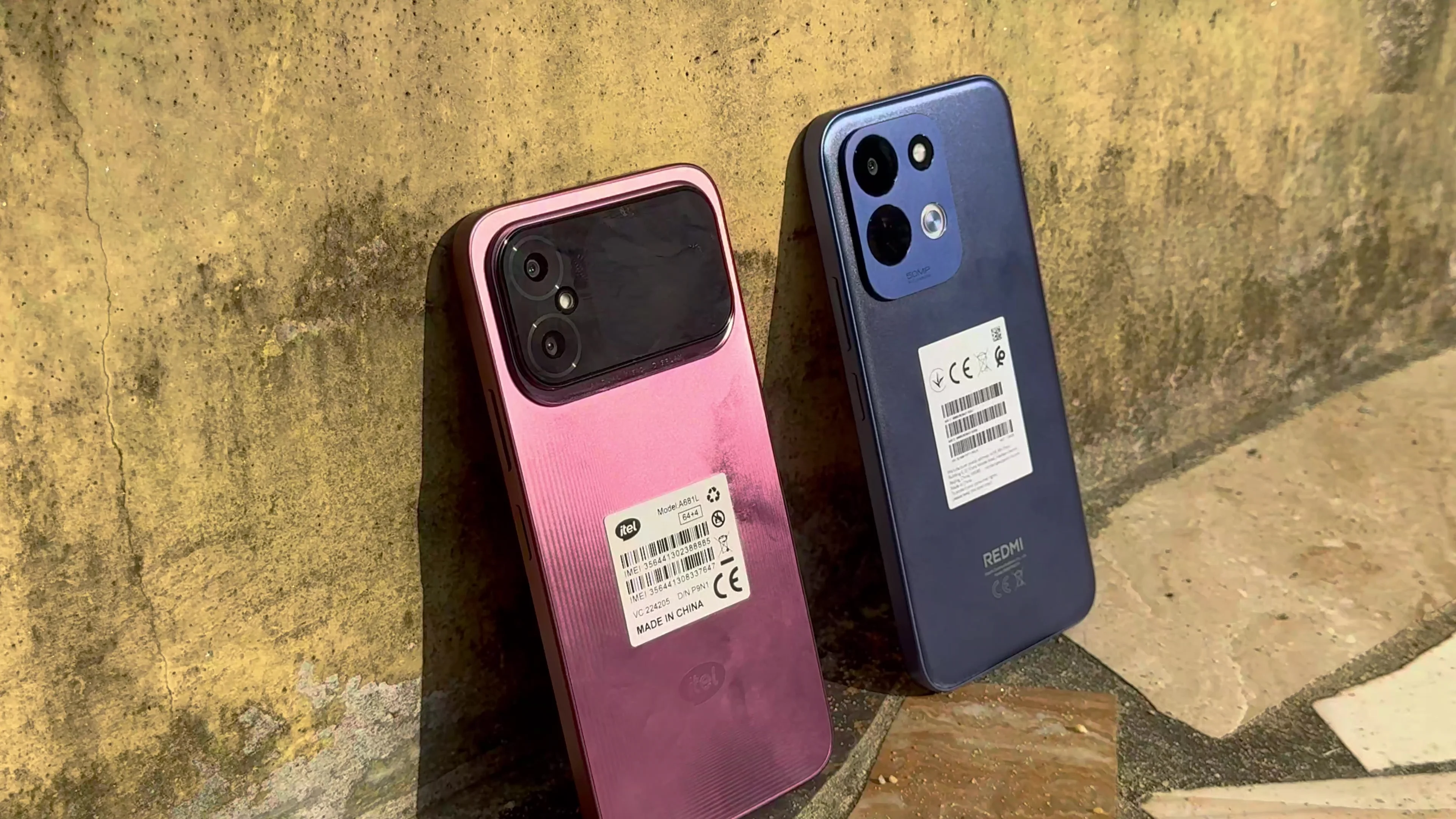
The itel A300+, which sells for around ₦145,000 in Nigeria, features a 2.01-inch interactive display on its rear panel. The Redmi 17, on the other hand, replaces the secondary screen with dynamic RGB lighting around its camera module.
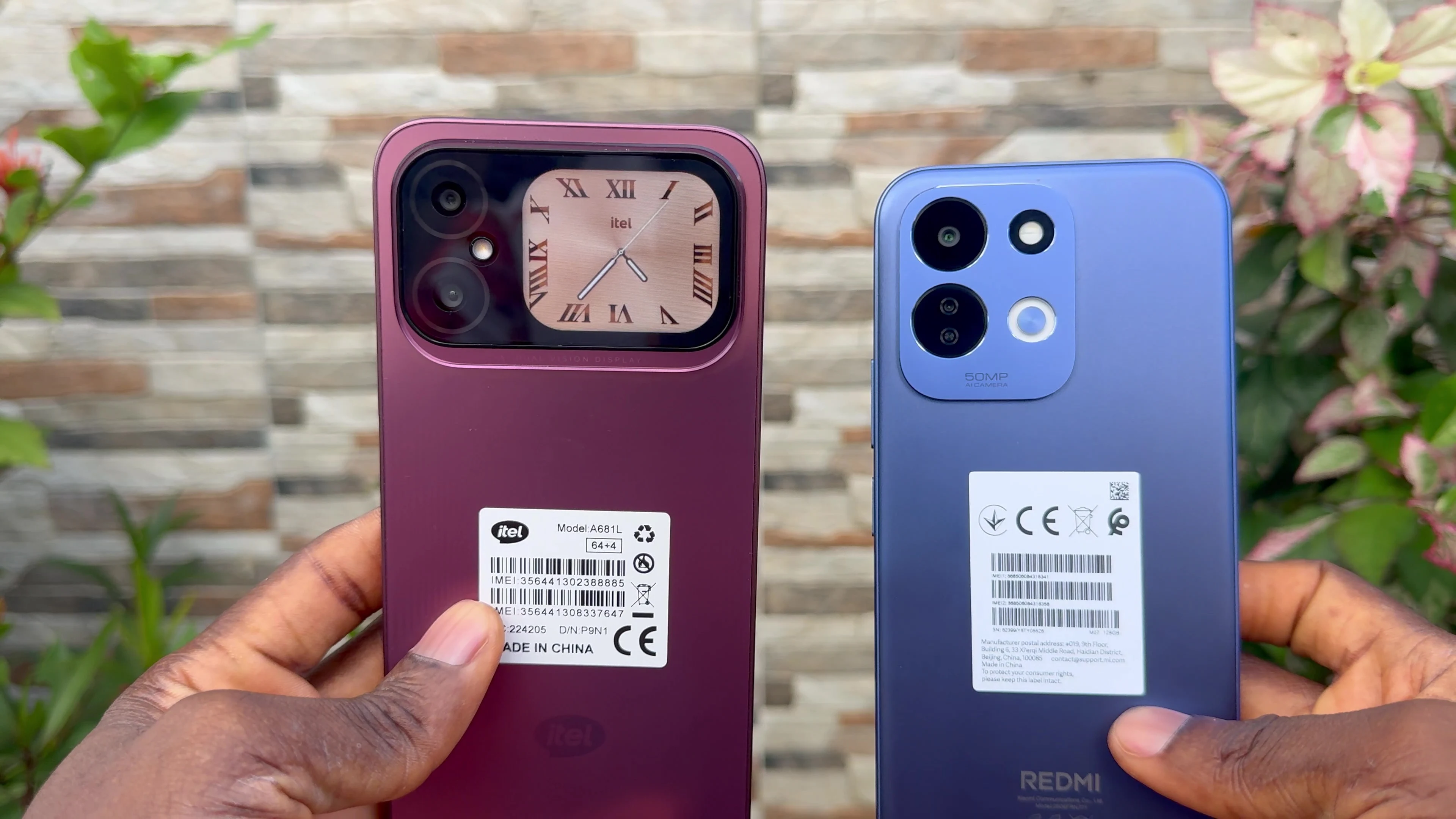
Beyond their unusual rear designs, both phones offer large displays, 120Hz refresh rates, stereo speakers and batteries designed to last longer than those of many conventional smartphones.
There is also a noticeable price difference. The A300+ costs approximately ₦145,000, while the Redmi 17 starts at around ₦212,000 for the 4GB RAM and 128GB storage version.
So, what does that extra money get you, and is the cheaper itel A300+ still a sensible choice?
Design and Build Quality
Both smartphones are relatively large devices, but their rear designs are what immediately separate them.
The itel A300+ features a 2.01-inch secondary display that offers more than decorative appeal. Users can check notifications, view information, control music and customise the clock. It can also serve as a viewfinder when taking selfies with the main rear camera.
This gives the A300+ an additional interactive interface that isn't commonly found on smartphones in this price category.
The Redmi 17 takes a different route with RGB lighting around its rear camera module. The lighting can respond to charging, notifications, camera activity and supported gaming effects. Users can also choose from multiple colours.
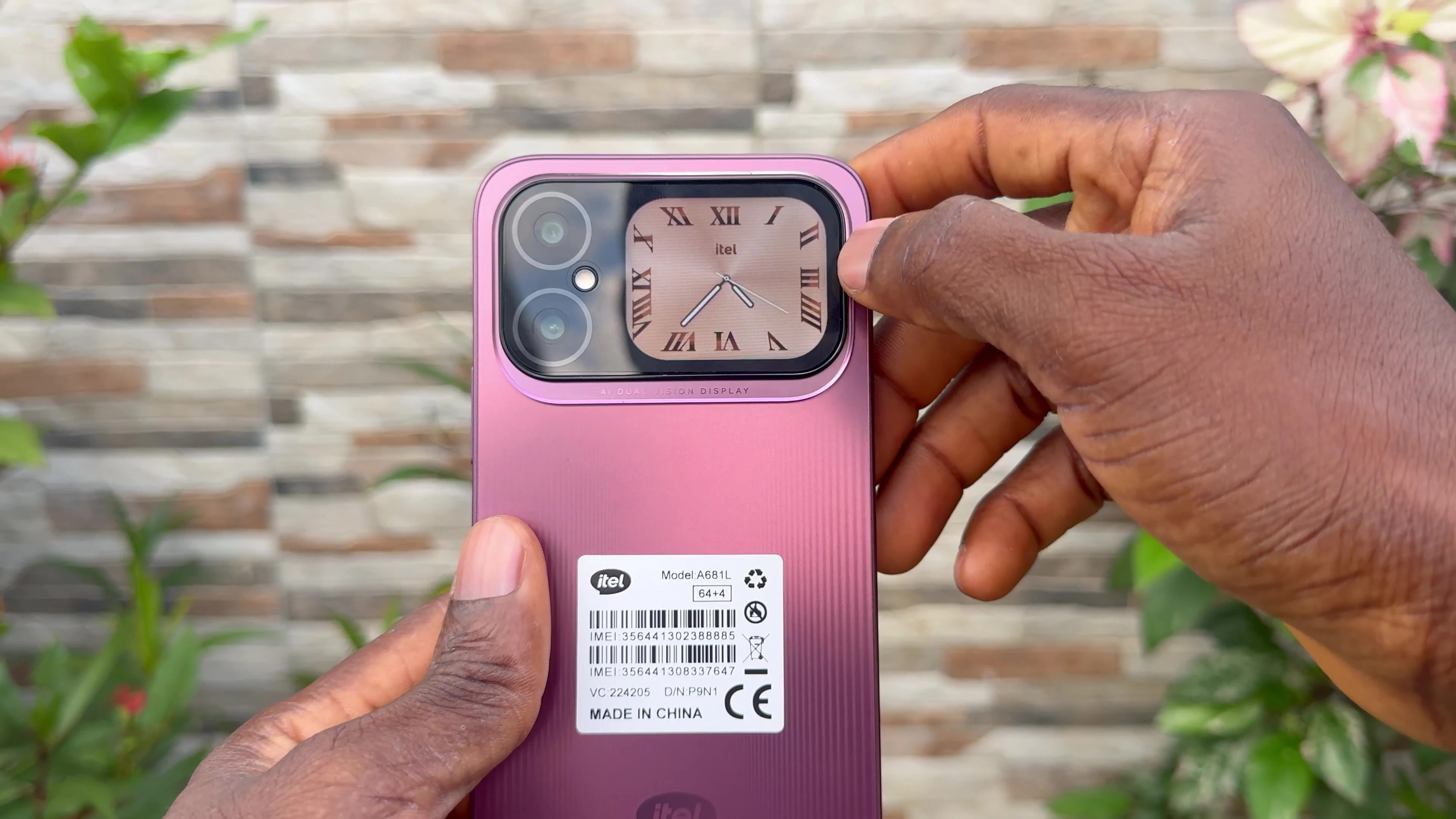
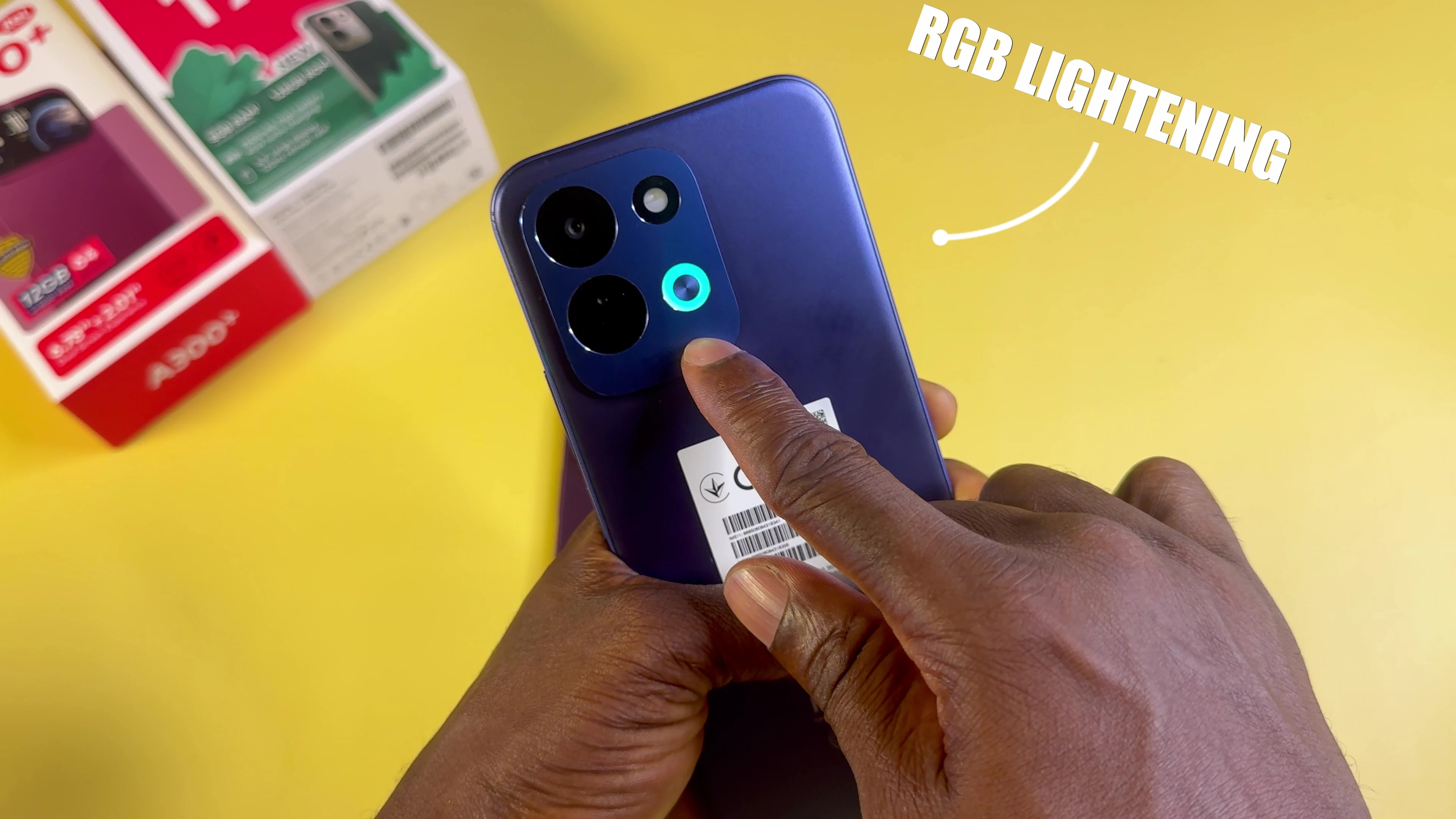
While the itel focuses on functionality through its secondary screen, Xiaomi's approach is primarily about visual effects and notifications.
Neither design is necessarily better for everyone. The secondary display offers more ways to interact with the phone, while the RGB lighting gives the Redmi a distinctive appearance without adding another screen.
Display
Both phones feature HD+ LCD displays with 120Hz refresh rates.
The itel A300+ has a 6.78-inch display, while the Redmi 17 offers a slightly larger 6.9-inch panel.
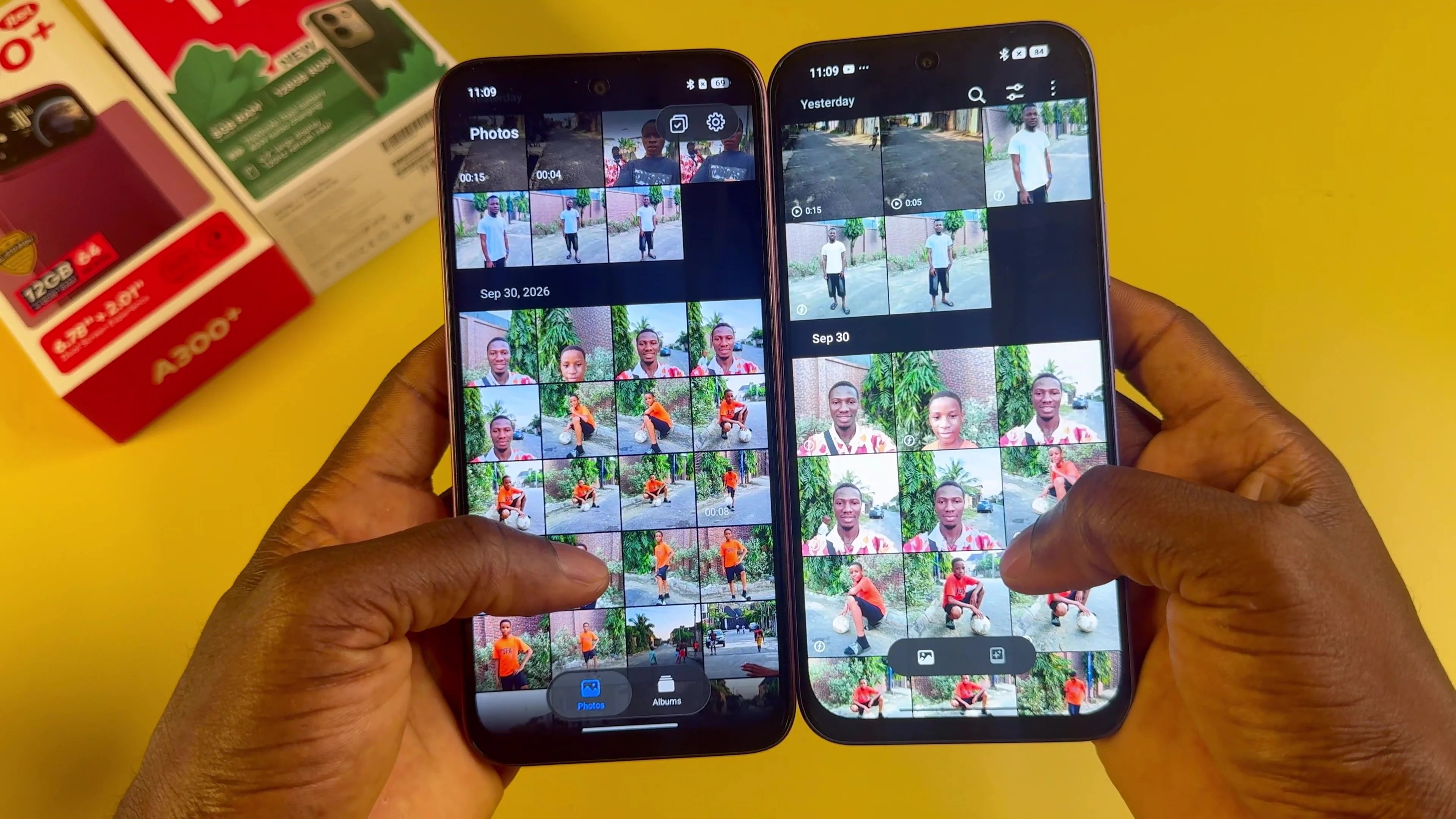
The high refresh rate helps make scrolling, animations and general navigation feel smoother. However, both devices use LCD technology, so neither offers the deeper blacks and contrast associated with AMOLED displays.
The Redmi 17 has an additional advantage in display protection, featuring Corning Gorilla Glass 7i. It also offers a typical brightness of up to 675 nits, with high-brightness mode reaching up to 825 nits.
Both phones are quite large, so neither is particularly suitable for buyers who prefer compact smartphones. The Redmi 17 is especially heavy at approximately 232 grams.
Performance and Memory
The itel A300+ uses the MediaTek Helio G81 Ultimate, while the Redmi 17 comes with the Helio G91-Ultra.
Both are entry-level 4G chipsets designed primarily for everyday smartphone activities rather than demanding gaming.
Applications such as WhatsApp, TikTok, YouTube, web browsing and messaging should be manageable on either device. However, users who frequently run demanding applications or switch between several heavy apps may notice their hardware limitations.
Neither phone is an ideal choice for anyone specifically looking for a gaming smartphone.
Memory and storage are where the Redmi 17 offers more flexibility. It comes with 4GB or 6GB of physical RAM, while storage options extend up to 256GB.
The itel A300+ has 4GB of RAM and comes with either 64GB or 128GB of internal storage.
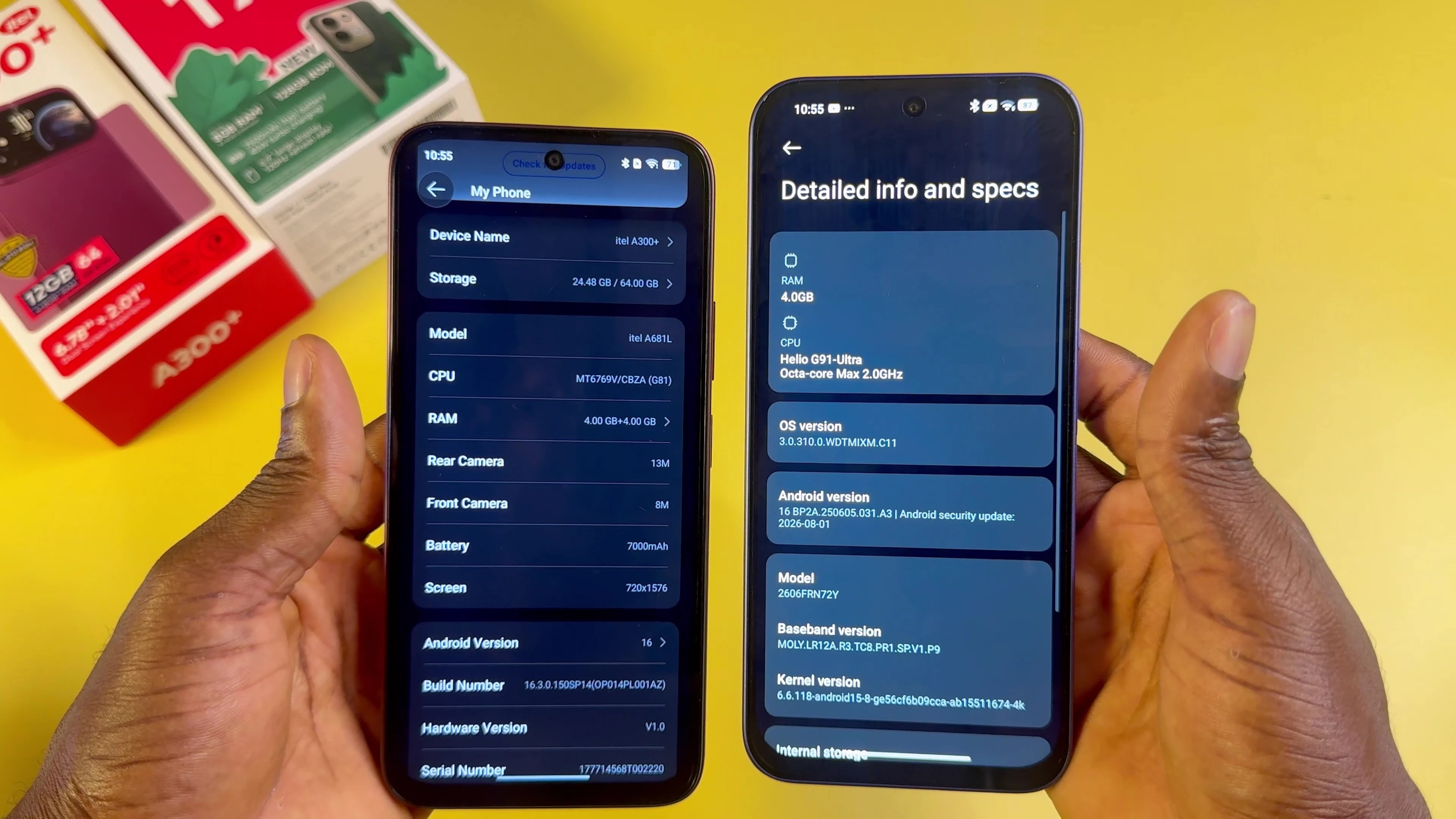
Both phones may offer memory expansion features, but virtual RAM should not be confused with physical RAM. These features use part of the internal storage to supplement memory and do not provide the same performance as having additional physical RAM.
For most buyers in 2026, 128GB is a more sensible starting point, particularly if they install plenty of applications, record videos, take photographs or download content regularly.
Camera Performance
The camera hardware gives the Redmi 17 a clear advantage on paper.
The itel A300+ features a 13MP rear camera and an 8MP front camera, while the Redmi 17 comes with a 50MP main camera and an 8MP selfie camera.
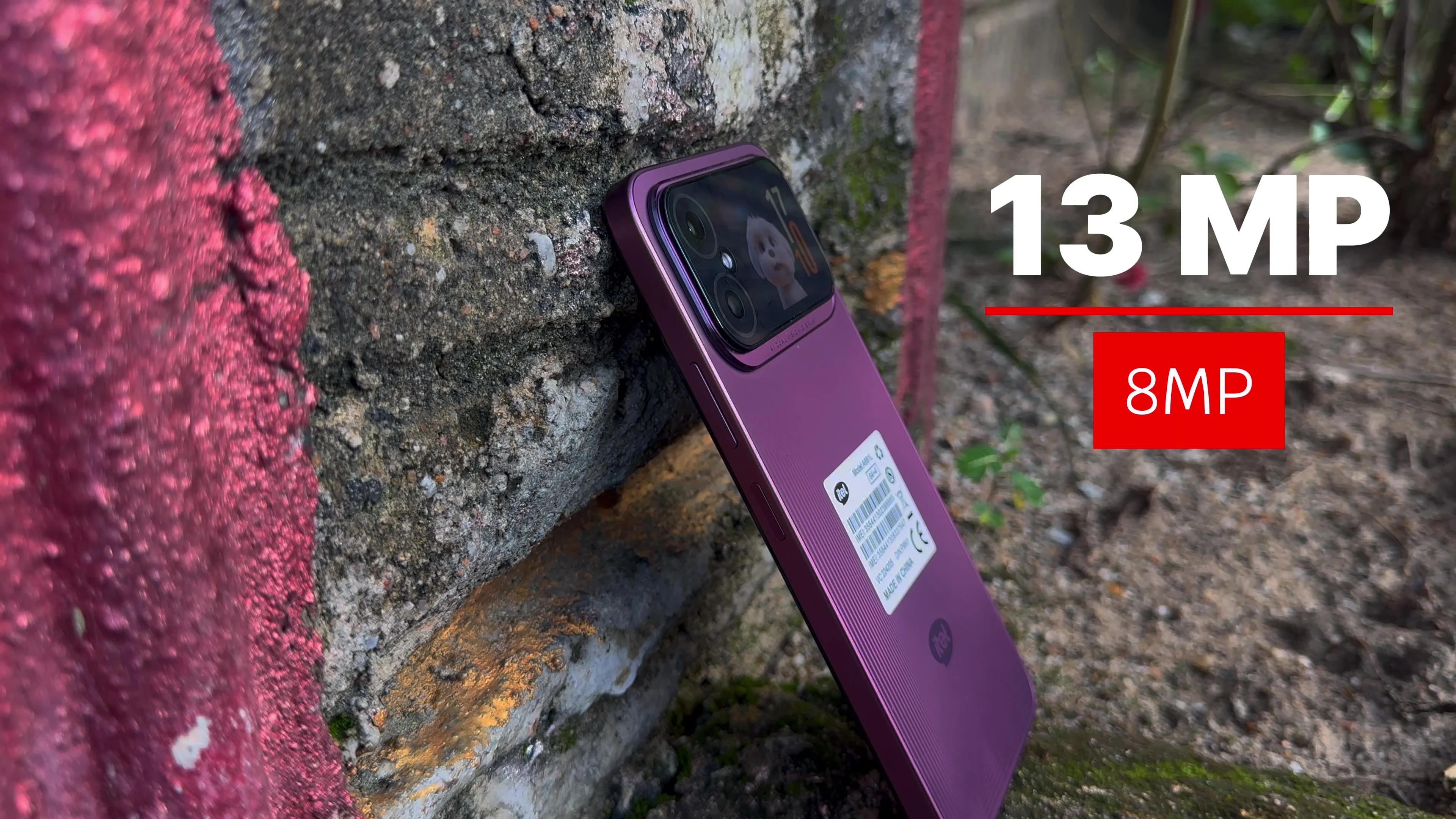
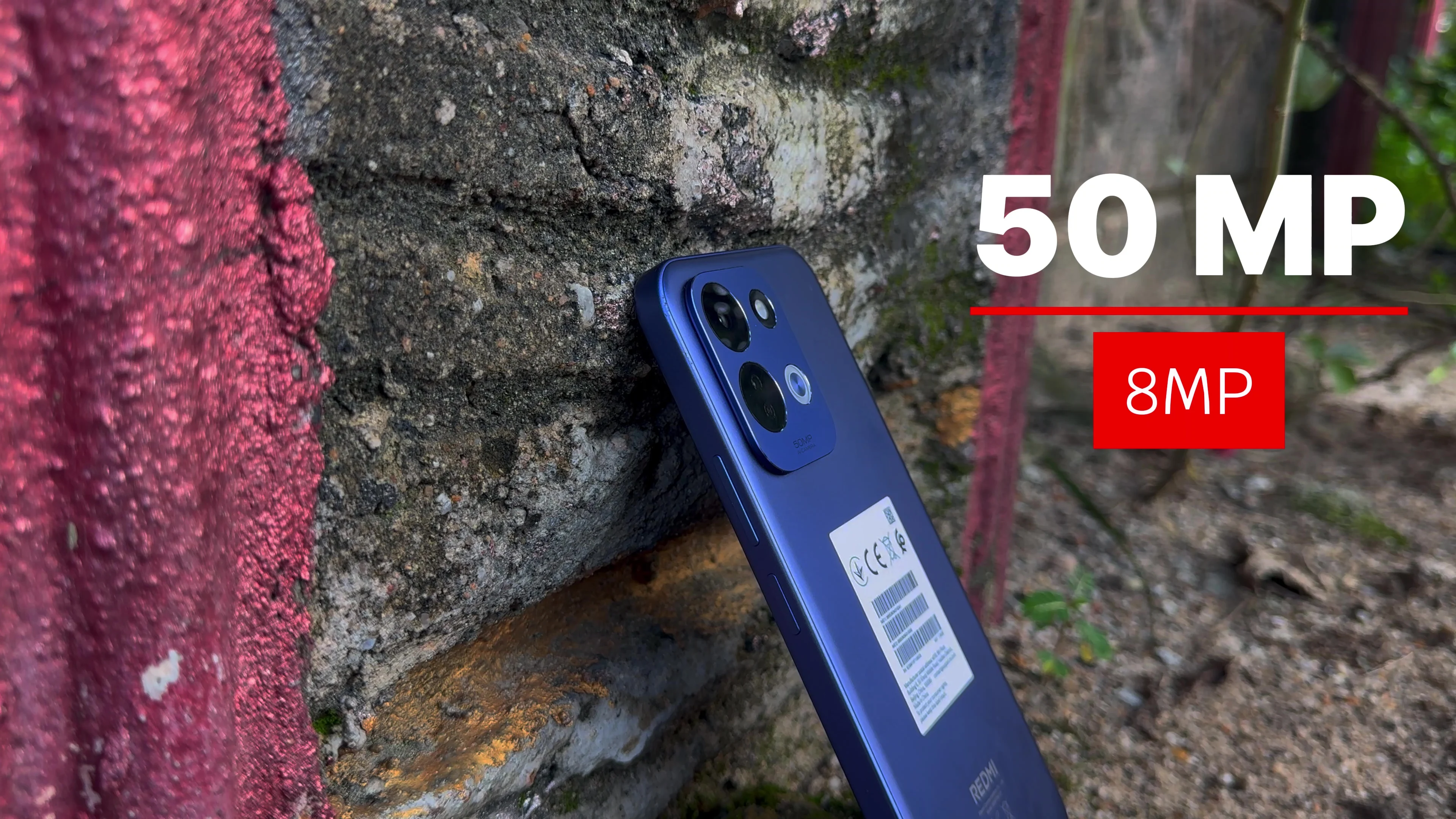
However, megapixel counts alone don't determine which phone takes better photographs.
In testing, the A300+ produced more saturated colours, stronger HDR and better edge detection in portrait photographs. The Redmi 17 delivered more natural-looking colours, making its images appear closer to the original scene.
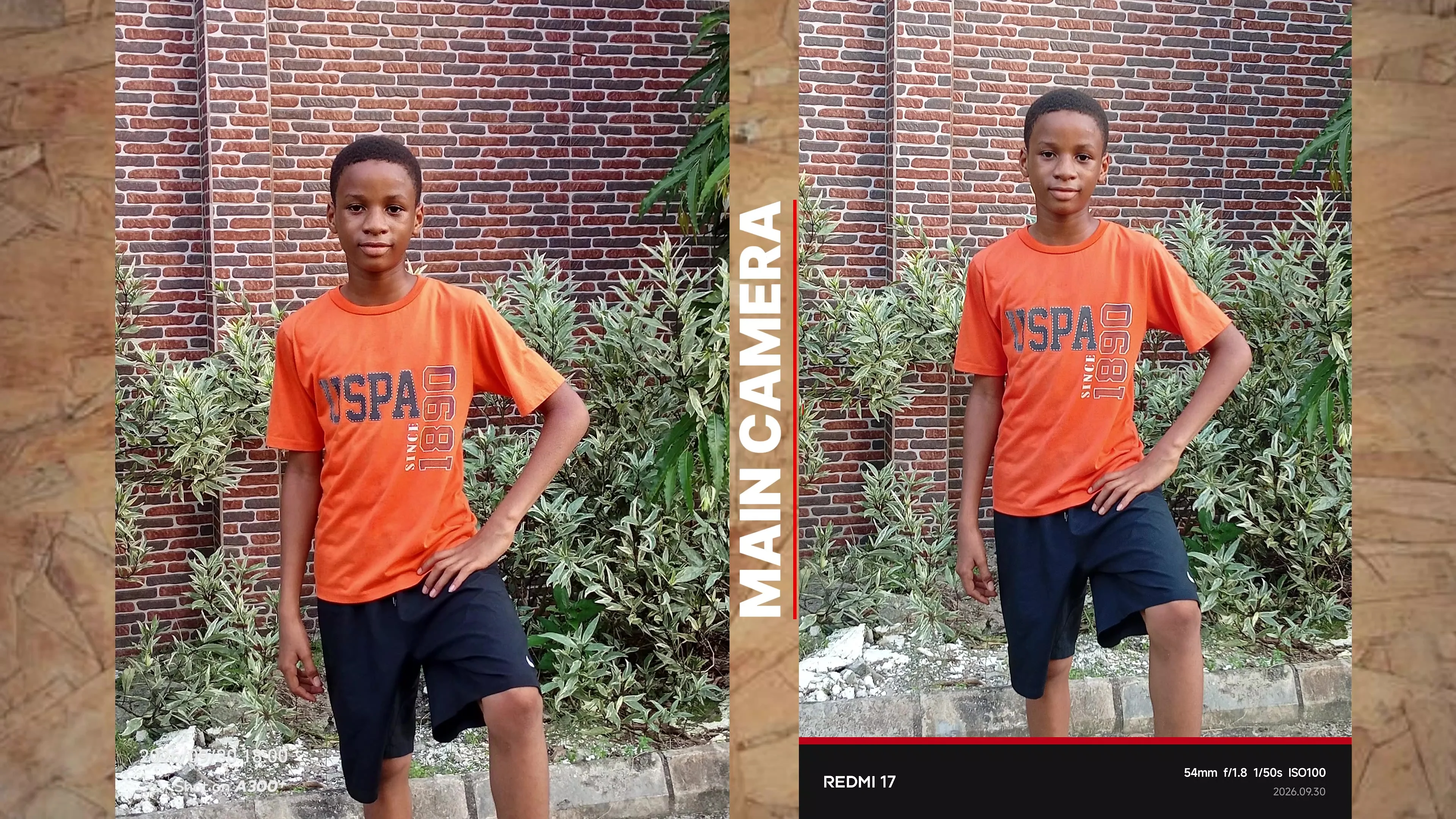






The difference was also noticeable with the selfie cameras. Although both phones use 8MP front cameras, the A300+ performed better in some situations, while the Redmi 17 occasionally produced selfies with a slightly whitish appearance.
For video recording, both devices support up to 1080p at 30fps.
The A300+ also offers portrait video recording, although this is limited to 720p.
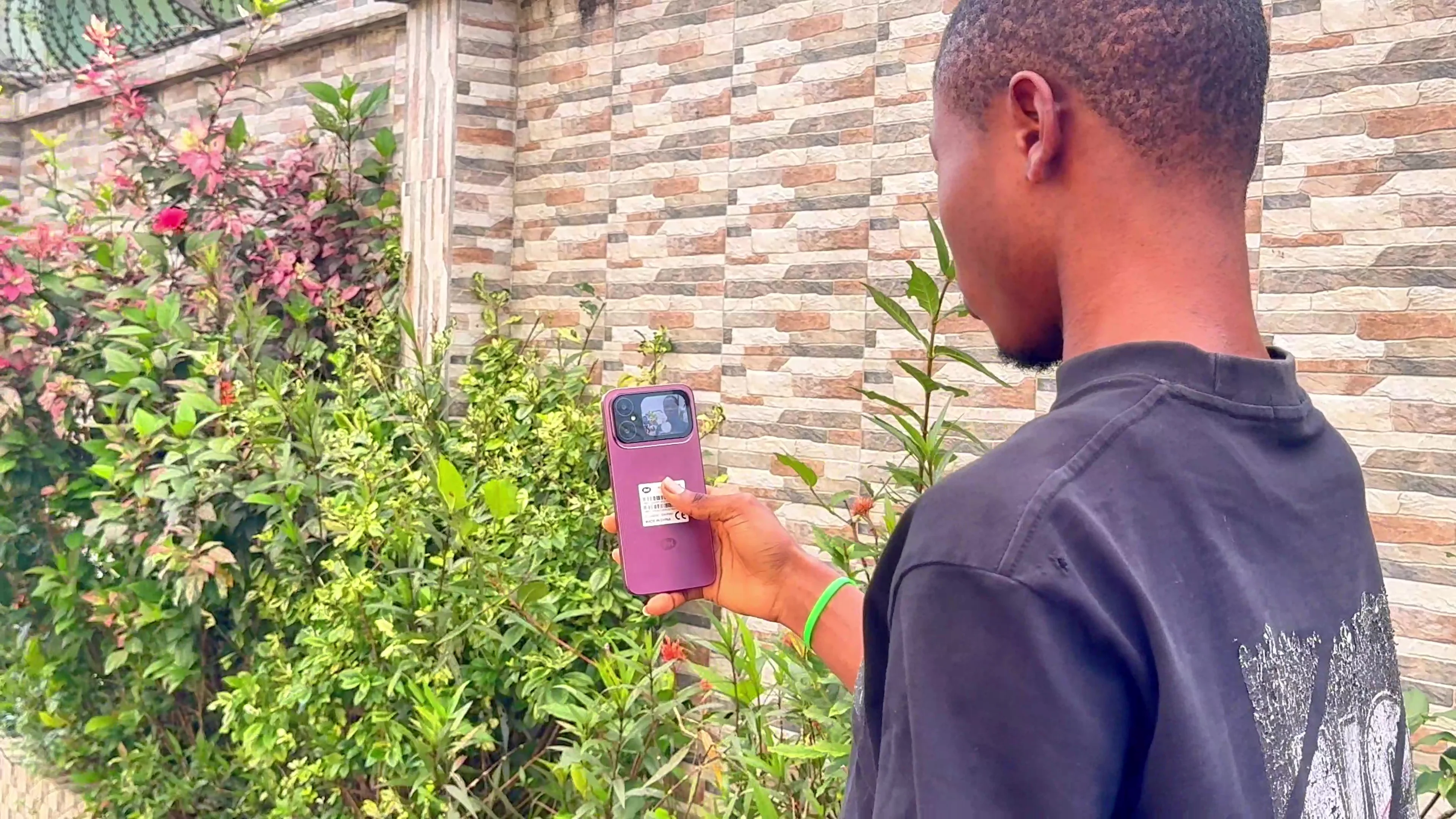
Another advantage of the itel is its rear display. Since it can function as a viewfinder, users can frame themselves while taking selfies with the main camera. This provides an alternative to relying on the lower-resolution front camera.
Overall, the Redmi 17 has more impressive camera hardware, but the actual results are more interesting than the specifications alone suggest.
Battery Life and Charging
Battery capacity is a major selling point for both smartphones.
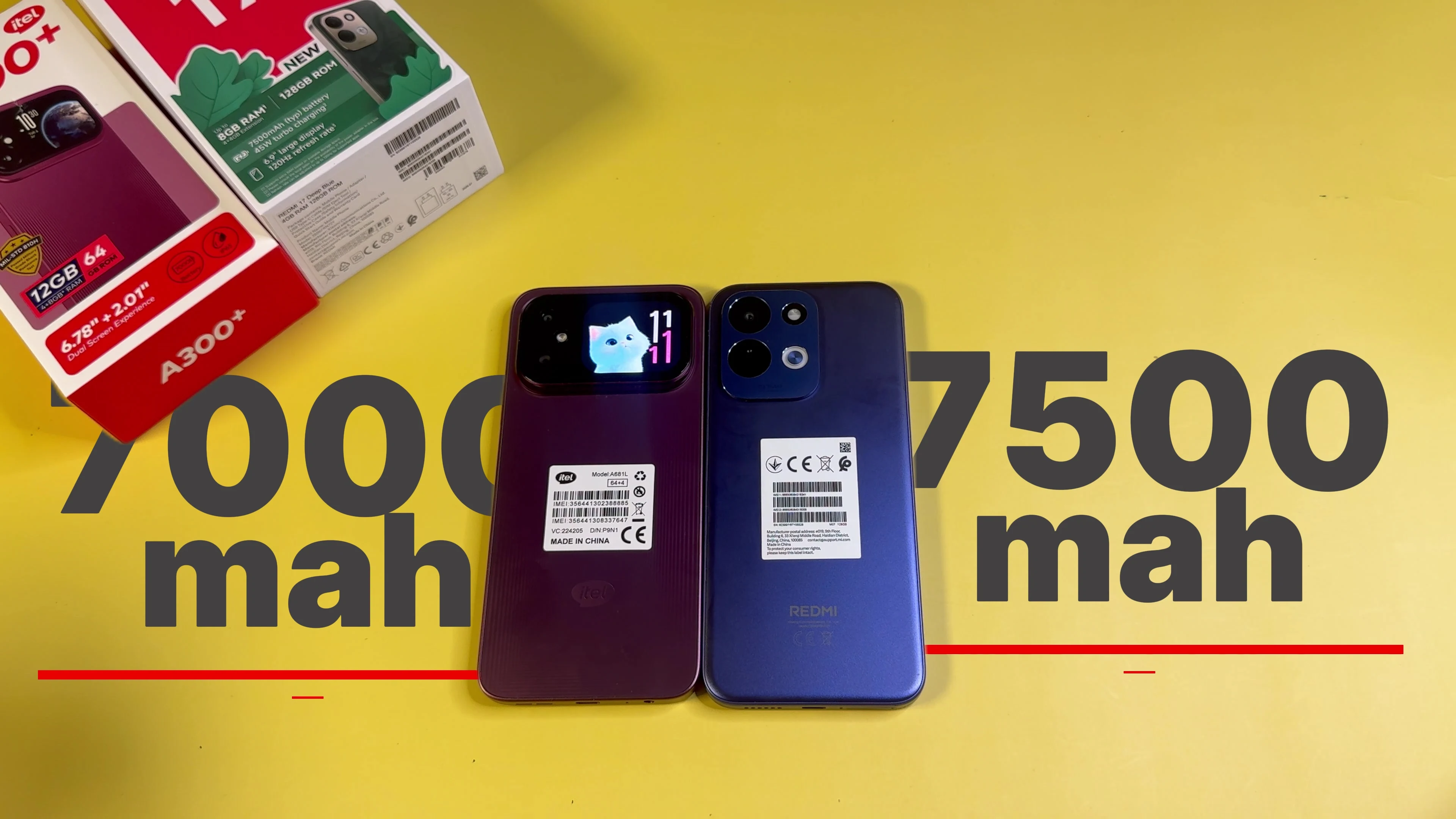
The itel A300+ packs a 7,000mAh battery, while the Redmi 17 takes things further with a 7,500mAh cell.
These capacities make both phones attractive to users who prioritise long battery life and don't want to charge their devices too frequently.
Xiaomi claims the Redmi 17 can deliver up to 91 hours of music playback under its internal testing conditions, alongside approximately two days of use depending on usage patterns.
Actual battery endurance will vary depending on factors such as network signal, screen brightness, mobile data usage and gaming.
Charging is where the Redmi 17 has a more noticeable advantage.
The A300+ supports 22.5W charging, while the Redmi 17 offers 45W Turbo Charging. Xiaomi states that the Redmi can reach a full charge in approximately 96 minutes under its specified testing conditions.
The Redmi 17 also supports up to 22.5W wired reverse charging, allowing users to charge compatible accessories or another smartphone.
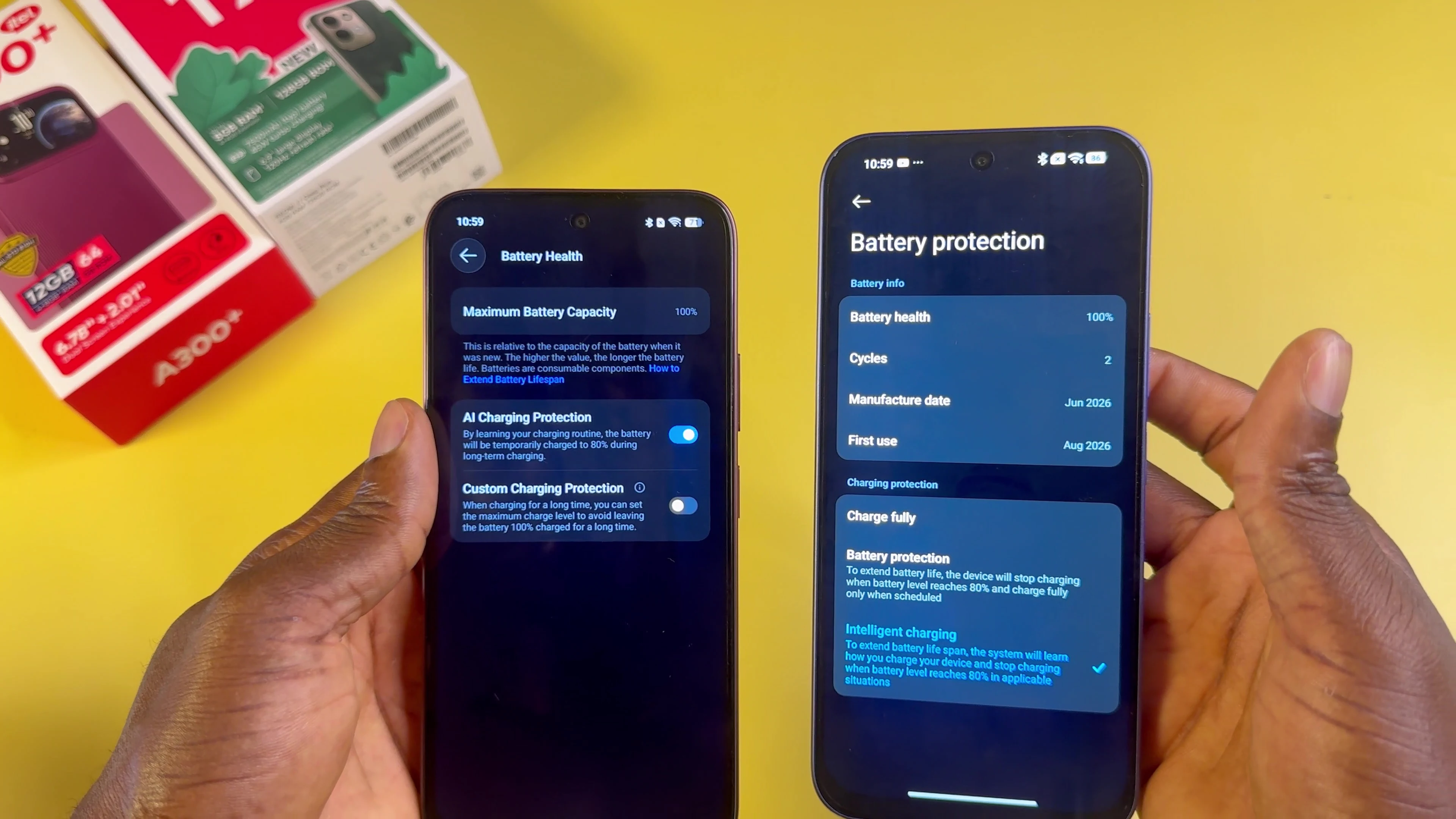
itel takes a different approach by including battery management features such as support for up to 1,200 charging cycles, AI charging protection and smart power management.
The A300+ still has a large battery, but its slower charging speed makes the Redmi 17 more appealing to people who want to spend less time connected to a charger.
Software and User Experience
The software experience is another area where the two phones take different approaches.
The itel A300+ runs itel OS based on Android 16 Go Edition. Android Go is designed for devices with more limited hardware resources, offering a lighter software experience.
itel also includes AI features through Sola, including AI captions, smart translation, AI Note and document assistance.
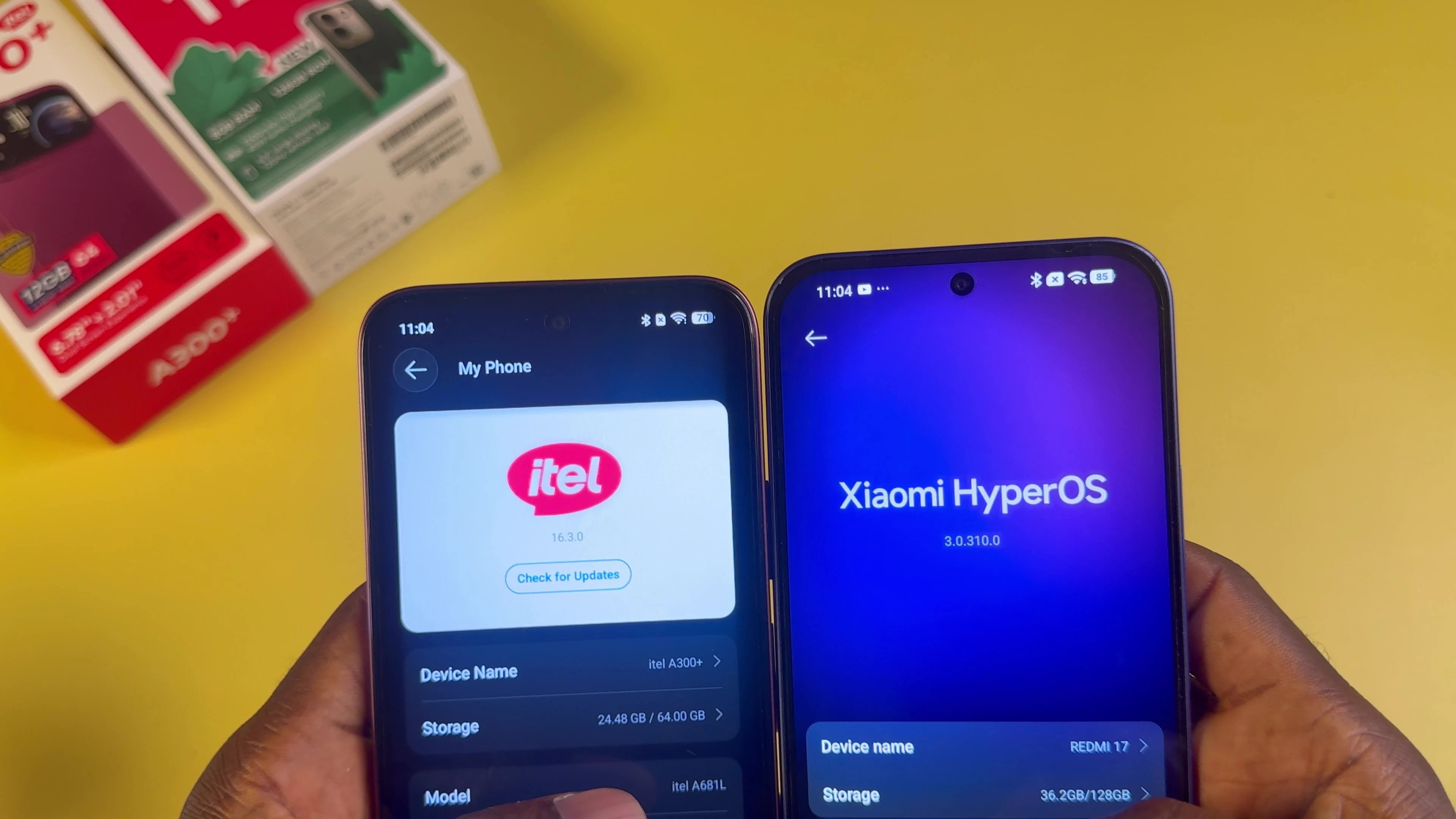
Another feature is Outdoor Booster, which can be useful when using navigation and driving applications such as inDrive, Uber and Bolt.
The Redmi 17 runs Android 16 with HyperOS 3. Xiaomi's software offers additional customisation options and features, including HyperIsland and other smart functions.
Xiaomi also claims that the Redmi 17 is designed to maintain a like-new software experience for up to 36 months under its stated conditions. This is a company claim rather than a guarantee that every aspect of the phone will perform identically throughout that period.
One important distinction is that this comparison covers the Redmi 17 4G. It should not be confused with the separate Redmi 17 5G, which uses different hardware.
Price and Value for Money
Price is arguably the biggest factor separating these two smartphones.
At the time of comparison, the itel A300+ sells for approximately ₦145,000 on Jumia, while the Redmi 17 starts at around ₦212,000 for the 4GB RAM and 128GB storage version.
The Redmi 17's higher memory and storage configurations cost more.
| Feature | itel A300+ | Redmi 17 |
|---|---|---|
| Feature Approximate starting price | itel A300+ ₦145,000 | Redmi 17 ₦212,000 |
| Feature Main display | itel A300+ 6.78-inch HD+ LCD | Redmi 17 6.9-inch HD+ LCD |
| Feature Refresh rate | itel A300+ 120Hz | Redmi 17 120Hz |
| Feature Rear design feature | itel A300+ 2.01-inch secondary display | Redmi 17 RGB lighting |
| Feature Processor | itel A300+ Helio G81 Ultimate | Redmi 17 Helio G91-Ultra |
| Feature Rear camera | itel A300+ 13MP | Redmi 17 50MP |
| Feature Front camera | itel A300+ 8MP | Redmi 17 8MP |
| Feature Battery | itel A300+ 7,000mAh | Redmi 17 7,500mAh |
| Feature Charging | itel A300+ 22.5W | Redmi 17 45W |
| Feature Operating system | itel A300+ Android 16 Go Edition-based itel OS | Redmi 17 Android 16 with HyperOS 3 |
| Feature Protection | itel A300+ IP65 | Redmi 17 IP64, Gorilla Glass 7i |
The difference is significant, especially for someone shopping within a strict budget.
For around ₦145,000, the A300+ offers its unusual rear display, a 120Hz screen, a 7,000mAh battery, 22.5W charging, stereo speakers, microSD support and IP65 protection.
The Redmi 17 gives buyers a larger battery, faster charging, a 50MP main camera, more RAM and storage options, reverse charging, Gorilla Glass 7i and a more feature-rich software experience.
The Redmi clearly offers a broader hardware package, but that doesn't automatically make it the better purchase for everyone.
itel A300+ vs Redmi 17: Which Should You Buy?
The itel A300+ makes more sense for buyers working with a budget of around ₦150,000. Its rear display gives it a unique identity, while the large battery and practical features make it an interesting everyday smartphone.
Its main limitations include the smaller storage options, slower charging and less impressive camera hardware on paper. Anyone considering the 64GB version should also think carefully about their storage requirements.
The Redmi 17 is a better option for buyers who can comfortably spend ₦200,000 or more. It offers faster charging, a larger battery, a higher-resolution main camera, additional memory and storage configurations, plus Gorilla Glass 7i protection.
However, the Redmi 17 still uses an HD+ LCD rather than AMOLED, and the Helio G91-Ultra is an entry-level 4G processor. Spending more doesn't turn it into a gaming-focused or premium-display smartphone.
Ultimately, the biggest difference between these phones is what each manufacturer prioritises.
The itel A300+ focuses on affordability and uniqueness, with its interactive secondary display being the main attraction. The Redmi 17 puts more emphasis on the overall hardware package, offering faster charging, a larger battery, better camera hardware and more storage options.
If the extra money isn't available, the A300+ can still deliver an interesting set of features for its price. If you have the additional budget and want a more complete package, the Redmi 17 is the more capable option.
Both phones have their strengths. The right choice comes down to which features matter most to you.