5 Best Phones to Buy Around ₦300,000 in Nigeria
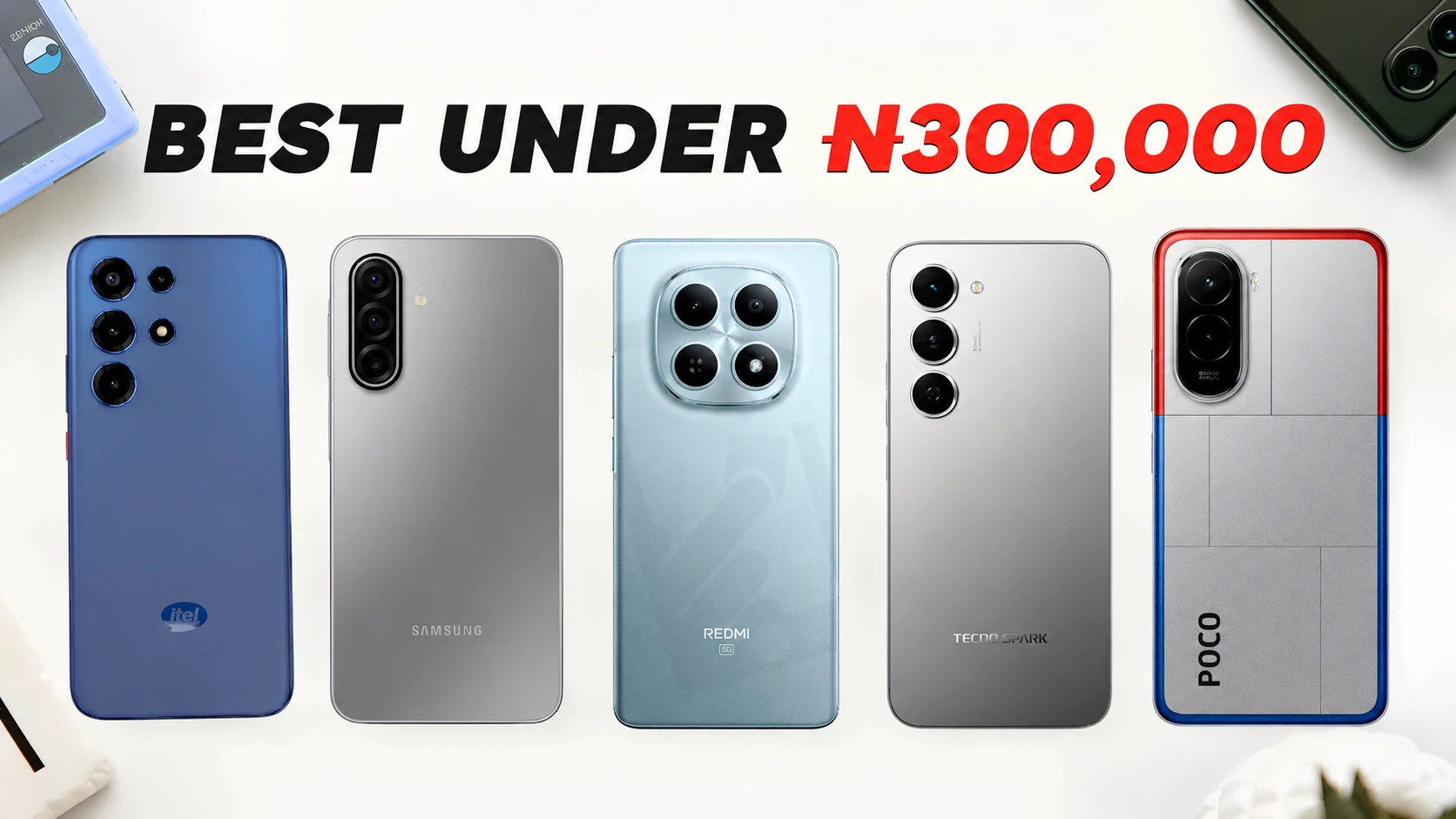
Buying a smartphone for close to ₦300,000 in Nigeria is a serious investment. At this price point, almost every manufacturer promises an impressive combination of powerful performance, capable cameras, long battery life, fast charging, beautiful displays, and modern software features.
The problem is that specifications don't always tell the full story.
A phone can have an impressive camera on paper but produce disappointing photos in low light. Another might have plenty of RAM but still feel sluggish during demanding tasks. Some offer excellent hardware but come with software that becomes frustrating after a few weeks.
That is why the best way to choose a phone in this price range is to look beyond the numbers and consider how the device actually performs in everyday use, what it does particularly well, where it falls short, and what type of user it is best suited for.
Here are five smartphones worth considering around the ₦300,000 mark, including one option that goes slightly beyond the budget but offers enough value to justify the extra spending.
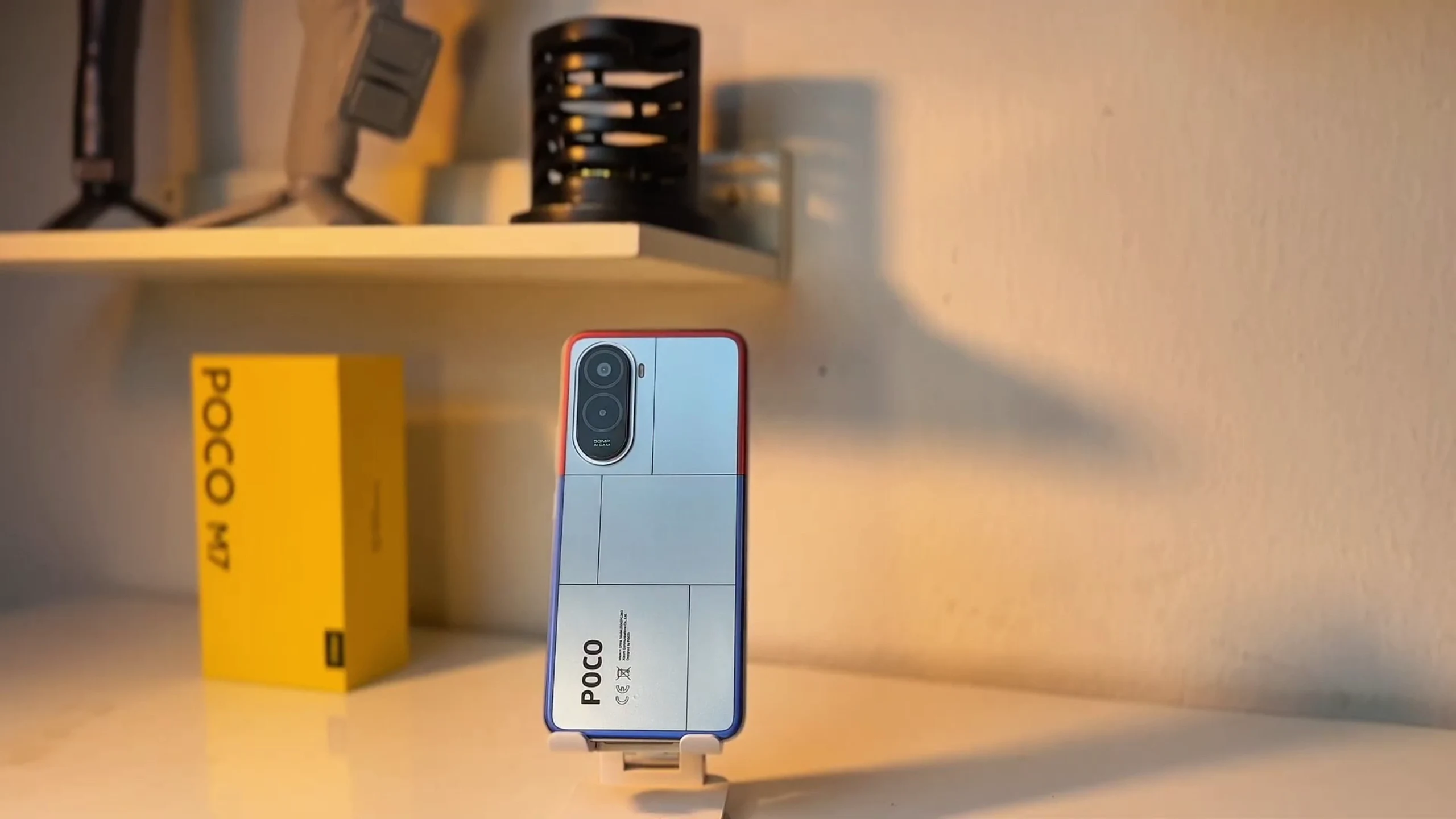
POCO M7
The POCO M7 is particularly appealing to people who prioritise performance and battery life over photography.
Its biggest advantage is speed. Everyday operations feel responsive, applications open quickly, and multitasking is generally smooth. For users who spend a significant amount of time playing games such as Call of Duty Mobile and PUBG, the POCO M7 offers plenty of performance for its price.
The phone also benefits from strong battery endurance. Heavy users should be able to get through a full day without constantly searching for a charger, making it a practical option for people who spend long hours away from a power source.
However, the camera system isn't its strongest feature.
Daylight photographs can be perfectly usable for social media and everyday photography, but image quality becomes less impressive when lighting conditions become difficult. Low-light photography is one of the areas where the POCO M7 shows its budget positioning, particularly when compared with more camera-focused competitors.
The software experience is another consideration. POCO uses HyperOS, which offers plenty of customisation and features but can also feel somewhat cluttered because of pre-installed applications and recommendations. Some users may also encounter advertisements within parts of the interface. Fortunately, many of these extras can be removed or disabled during setup.
For someone whose priorities are gaming, speed, multitasking and battery life, the POCO M7 represents excellent value at ₦259,700.
For someone who takes lots of photos and wants the best camera experience possible, however, there are stronger alternatives.
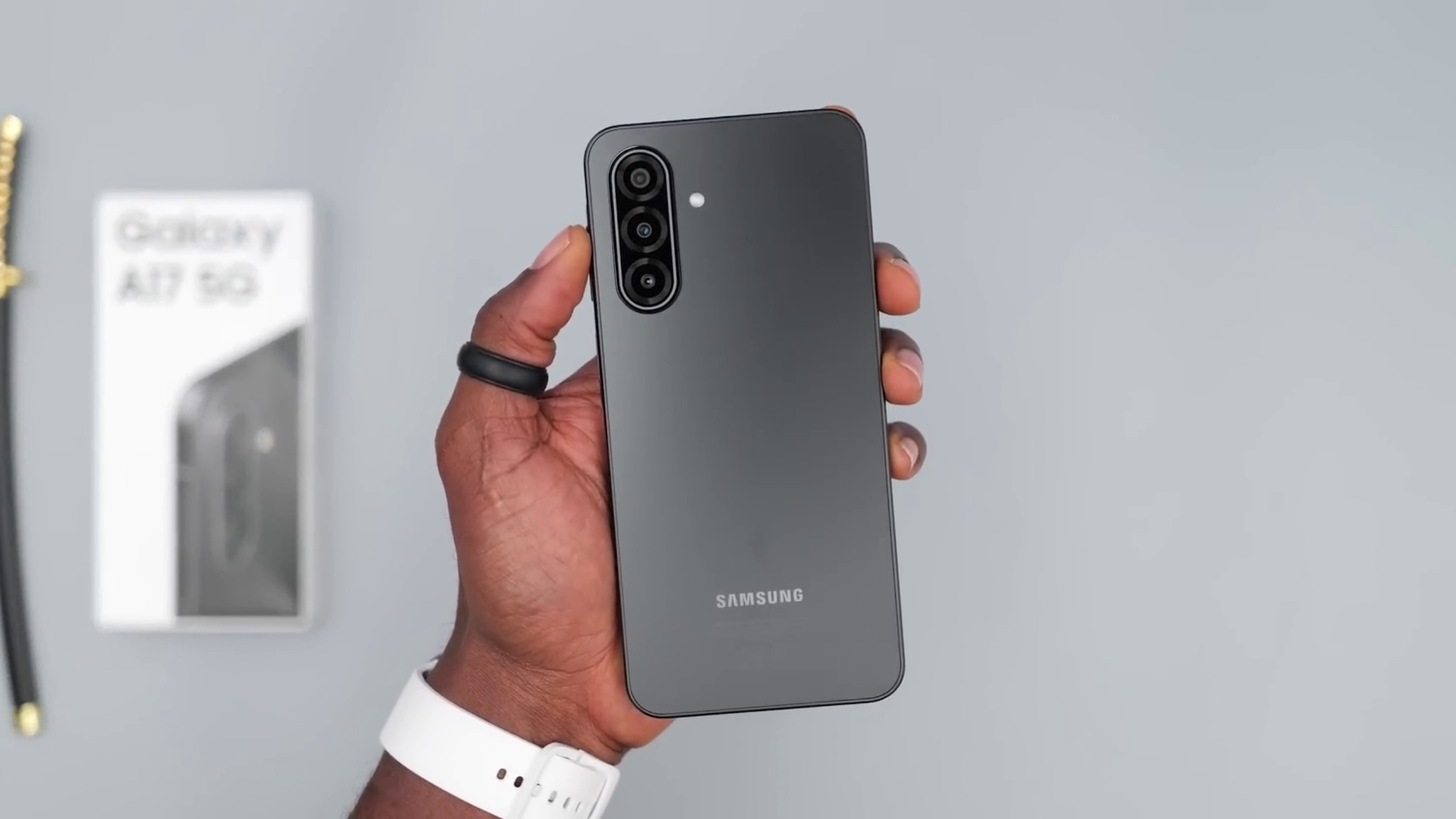
Samsung Galaxy A17 5G
The Samsung Galaxy A17 5G takes a different approach.
Rather than competing aggressively on raw performance, Samsung's biggest advantage here is long-term software support and reliability.
The Galaxy A17 5G is particularly attractive to people who prefer keeping their smartphones for several years rather than replacing them annually. Samsung's commitment to Android updates and security updates gives the device a significant advantage over many competing phones in this price category.
That matters because a smartphone isn't only about how fast it feels on the day you buy it. Continued software support helps keep a phone secure, compatible with newer applications, and useful for longer.
Samsung also delivers a polished software experience through One UI. The interface is mature, well organised, and packed with useful features without feeling unnecessarily complicated.
The display is another strength. Samsung's AMOLED technology produces vibrant colours, deep blacks and an enjoyable viewing experience, making the phone well suited to watching YouTube, Netflix, football highlights and other video content.
The compromise is performance.
The Galaxy A17 5G is perfectly capable of handling everyday activities, but it isn't the phone I'd recommend to someone who spends several hours gaming every day. When heavily pushed with demanding applications or games, competing phones can offer a noticeably faster experience.
The cameras are dependable rather than exceptional. Images generally have pleasant colours and good dynamic range, making them suitable for everyday photography and social media.
Battery life is similarly reliable. It may not lead the category, but it should comfortably get most users through a normal day.
The Galaxy A17 5G therefore makes the most sense for students, professionals, parents and everyday users who value reliability and long-term software support more than maximum gaming performance.
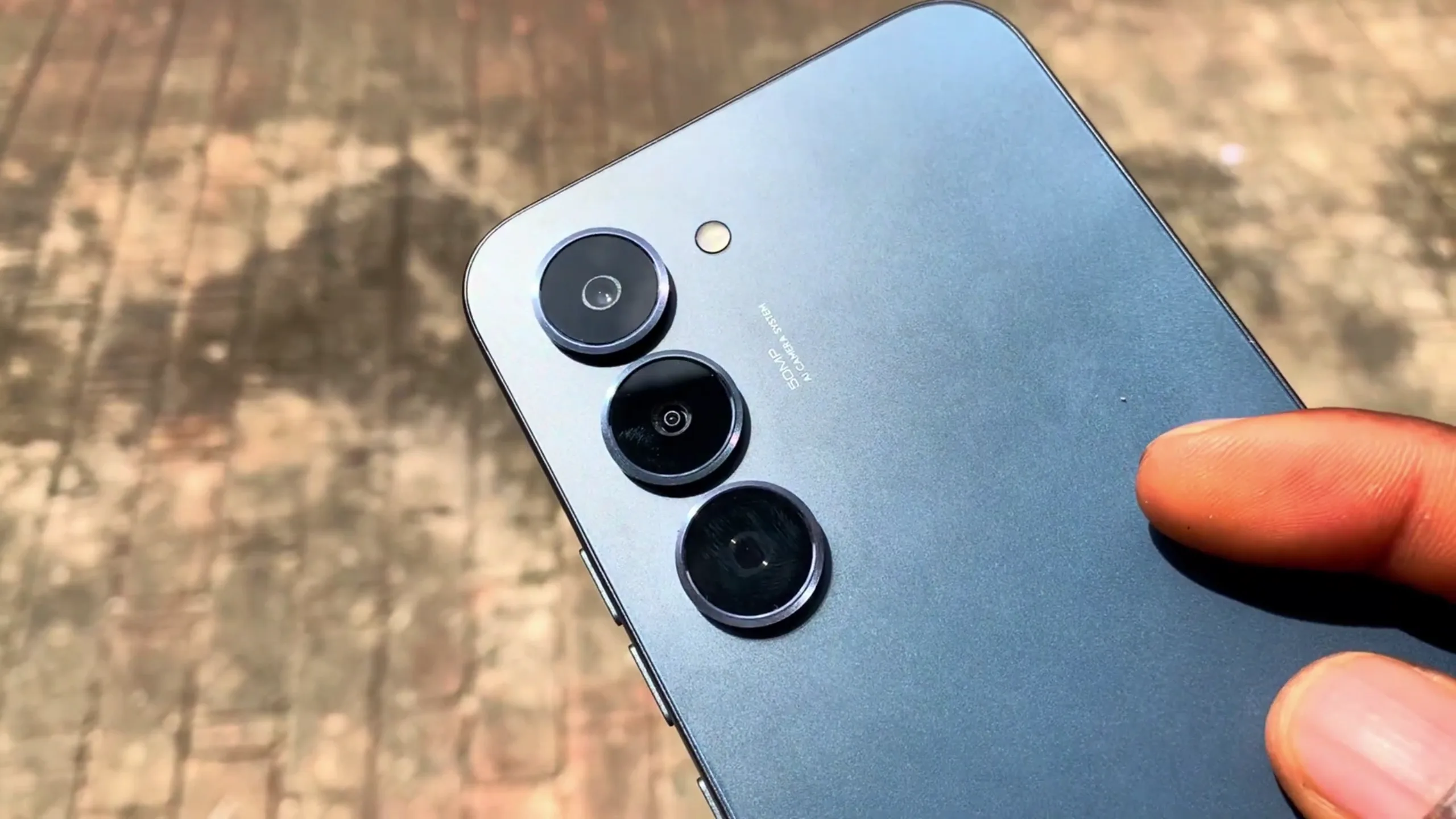
TECNO Spark 40 Pro
At ₦298,000, the TECNO Spark 40 Pro sits almost perfectly at the top of the ₦300,000 budget.
What makes it interesting is how well it balances different aspects of the smartphone experience.
Instead of focusing almost entirely on one area, TECNO has created a device that offers a strong combination of display quality, design, cameras, battery life, charging and everyday performance.
The display immediately makes the phone feel more expensive than it actually is. Its high refresh rate makes scrolling and animations feel smooth, which is particularly noticeable when browsing social media or navigating through the interface.
The design is another major strength. The phone looks modern and feels more premium than its price would suggest.
Performance is also good enough for normal everyday use and moderate gaming. Unless you're pushing demanding games at the highest settings for extended periods, the experience should be more than adequate for most users.
The camera system is another area where TECNO has made considerable progress. Daylight photographs are colourful and social-media friendly, while the selfie camera is capable of producing attractive results for everyday content.
The main weakness is low-light photography. Once lighting conditions become difficult, image processing isn't quite as consistent as the best camera-focused phones in this category.
Battery life is dependable, while fast charging makes it easier to quickly recover some battery when you're running low.
TECNO's HiOS has also improved considerably, although users may still find duplicate applications and additional software that they don't necessarily need. Removing unnecessary applications and adjusting the settings can make the experience considerably cleaner.
For someone who wants a balanced smartphone without a major weakness, the Spark 40 Pro is one of the strongest choices available at this price.
At ₦298,000, it is particularly attractive to buyers who don't want to exceed their ₦300,000 budget.
itel S26 Ultra
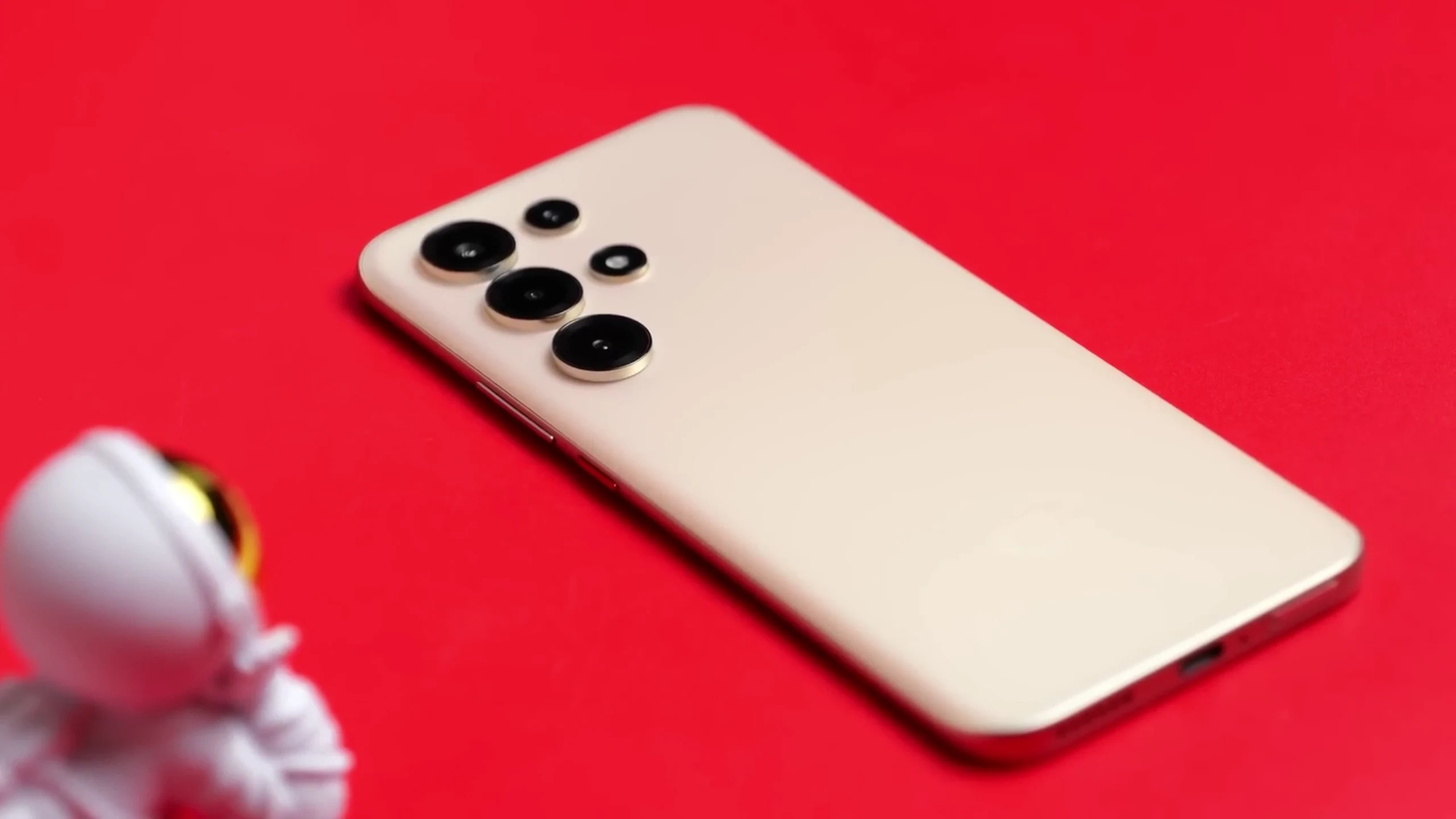
The itel S26 Ultra is one of the more interesting options in this price category because it focuses heavily on delivering a premium smartphone experience at a relatively affordable price.
At around ₦247,000, its design is one of the first things that stands out.
The curved display, slim body and overall styling give the phone a considerably more expensive appearance than its price suggests. It is the kind of device that can easily make someone ask how much it costs after seeing it in person.
The display itself is one of the phone's strongest features. It is large, colourful, smooth and bright enough for comfortable outdoor use. Whether you're watching videos, browsing social media or simply navigating through applications, the screen contributes significantly to the phone's premium feel.
Another impressive aspect is the combination of a large battery with a relatively slim and lightweight body. Users get strong battery endurance without having to carry an unusually thick or heavy smartphone.
Performance is also respectable for the price.
Everyday activities such as messaging, browsing, social media, video streaming and switching between applications should feel responsive. The phone can also handle popular games, although it isn't designed to compete with dedicated gaming devices.
The cameras are more capable than their budget positioning might suggest. The main camera can produce detailed and attractive photographs in good lighting, while the selfie camera is particularly useful for people who regularly take selfies, make video calls or create social-media content.
Video stabilisation is another useful feature, especially for people who want to record handheld videos without excessive camera shake.
There are, however, some important compromises.
The biggest is charging speed. Despite having a large battery, the phone's 18W charging is relatively slow compared with some competitors. If you're frequently running your battery down to very low levels, you'll spend more time waiting for it to charge.
The curved screen may also be a concern for some buyers. While it contributes to the premium appearance, curved displays can be more expensive to repair, and finding suitable screen protection can sometimes be more difficult than with a flat display.
Software support is another area where Samsung maintains an advantage. Buyers who plan to keep their phones for many years may prefer Samsung's more established long-term update policy.
For someone who wants a stylish, premium-looking smartphone without spending close to ₦300,000, however, the itel S26 Ultra is a very compelling option.
Redmi Note 15
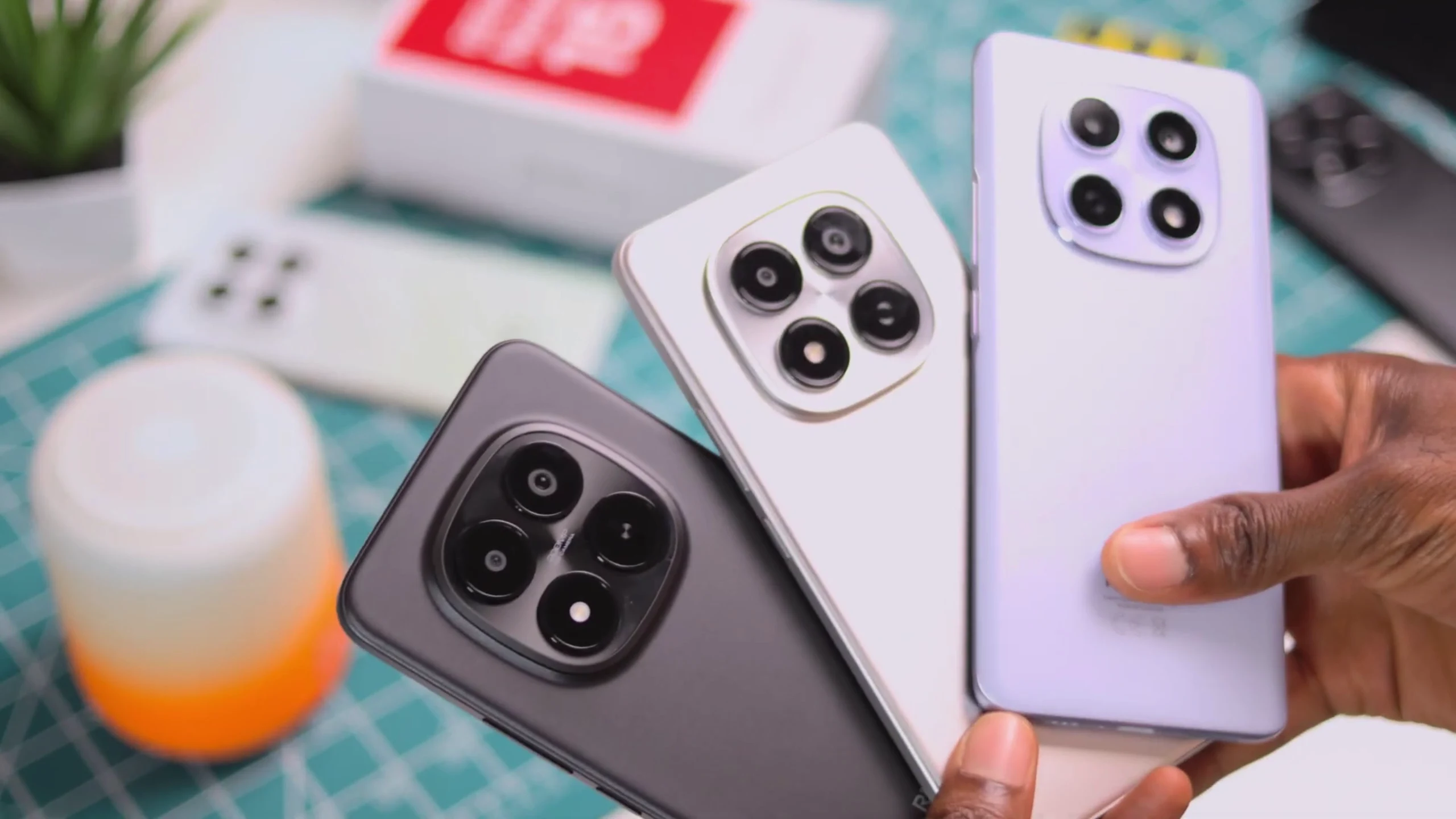
The Redmi Note 15 technically falls outside the ₦300,000 budget, with a price of around ₦316,900.
That's approximately ₦16,900 above the stated budget, so it shouldn't be considered a strict under-₦300,000 option.
However, if your budget has some flexibility, the additional spending could be worthwhile because the Redmi Note 15 offers a particularly strong combination of hardware and everyday usability.
The display is one of its biggest attractions.
The AMOLED panel is sharp, colourful and smooth, making everything from watching movies and browsing social media to viewing photos and playing games more enjoyable.
It also gets bright enough for outdoor use, which is particularly useful in Nigeria where smartphones are frequently used under strong sunlight.
Battery life is another major strength. The phone is capable of providing strong all-day endurance, even for fairly demanding users. Fast charging also makes topping up the battery considerably more convenient.
Photography is another area where the Redmi Note 15 performs well.
Its 108MP main camera can produce detailed and attractive photographs in good lighting. Everyday situations such as family gatherings, outdoor events, food photography and social-media content are handled well.
However, the high megapixel count shouldn't be confused with flagship-level camera performance. Low-light photography remains one of its limitations, and the results become less impressive as lighting conditions deteriorate.
Performance is similarly balanced.
For WhatsApp, YouTube, social media, browsing and everyday multitasking, the phone performs comfortably. It can also handle gaming, although buyers who care primarily about gaming performance may find the POCO M7 more appealing.
The biggest criticism is arguably the software.
HyperOS is feature-rich but can feel cluttered, with pre-installed applications, recommendations and additional notifications that some users may not want. Much of this can be removed or disabled, but having to spend time cleaning up the software can be frustrating.
The processor and software combination also means the phone isn't necessarily as fast as its premium display and design might suggest when pushed heavily.
Nevertheless, the Redmi Note 15 remains a strong option because of its overall package.
You get a premium design, excellent AMOLED display, strong battery life, fast charging and a capable main camera, all combined into a device that should satisfy most everyday users.
If your budget is strictly limited to ₦300,000, there is no reason to stretch yourself financially. The TECNO Spark 40 Pro, itel S26 Ultra, Samsung Galaxy A17 5G and POCO M7 are all strong alternatives.
But if you can comfortably add around ₦17,000 to your budget, the Redmi Note 15 becomes a very attractive upgrade.
Which Phone Is Right for You?
There isn't one smartphone that is perfect for everyone. The right choice depends largely on what you value most in a phone.
For Gaming and Performance: POCO M7
The POCO M7 is the obvious choice if your priorities are gaming, speed, multitasking and battery life. Its camera system is less impressive, but its performance-focused approach makes it appealing to power users.
For Long-Term Software Support: Samsung Galaxy A17 5G
The Samsung Galaxy A17 5G is better suited to people who want long-term software support, security and reliability. It isn't the fastest option here, but Samsung's software support makes it a safer long-term investment.
For Overall Balance: TECNO Spark 40 Pro
The TECNO Spark 40 Pro is one of the best choices for someone who wants a little bit of everything. Its combination of display, design, cameras, battery, charging and everyday performance makes it an excellent all-rounder.
For Premium Design on a Budget: itel S26 Ultra
The itel S26 Ultra stands out for its premium-looking design, impressive display, strong battery life and capable cameras. At ₦247,000, it is particularly attractive to buyers who want their phone to look more expensive than it actually is.
For the Most Complete Package: Redmi Note 15
If you can stretch your budget beyond ₦300,000, the Redmi Note 15 offers one of the most complete packages here, combining an excellent display, strong battery life, fast charging, capable cameras and premium design.
Final Thoughts
The biggest mistake you can make when buying a smartphone around ₦300,000 is choosing based solely on the specification sheet.
A phone with the fastest processor isn't necessarily the best choice for someone who values camera quality. A phone with the best camera isn't necessarily ideal for a gamer. And a phone with the most features isn't necessarily the best long-term device.
Instead, consider how you actually use your smartphone every day.
If gaming is your priority, the POCO M7 makes sense. If you want years of software support, consider the Samsung Galaxy A17 5G. For a balanced experience, the TECNO Spark 40 Pro is difficult to overlook. If design and value are your priorities, the itel S26 Ultra is compelling. And if you can stretch beyond ₦300,000, the Redmi Note 15 offers an impressive overall package.
The best smartphone isn't necessarily the one with the biggest numbers on the box.
It's the one that gives you the features and experience that matter most to you.